Compare gear development using your measured wheel rollout
Calculate theoretical metres per crank turn from actual tooth counts and a measured wheel circumference, without prescribing riding effort.
Updated:
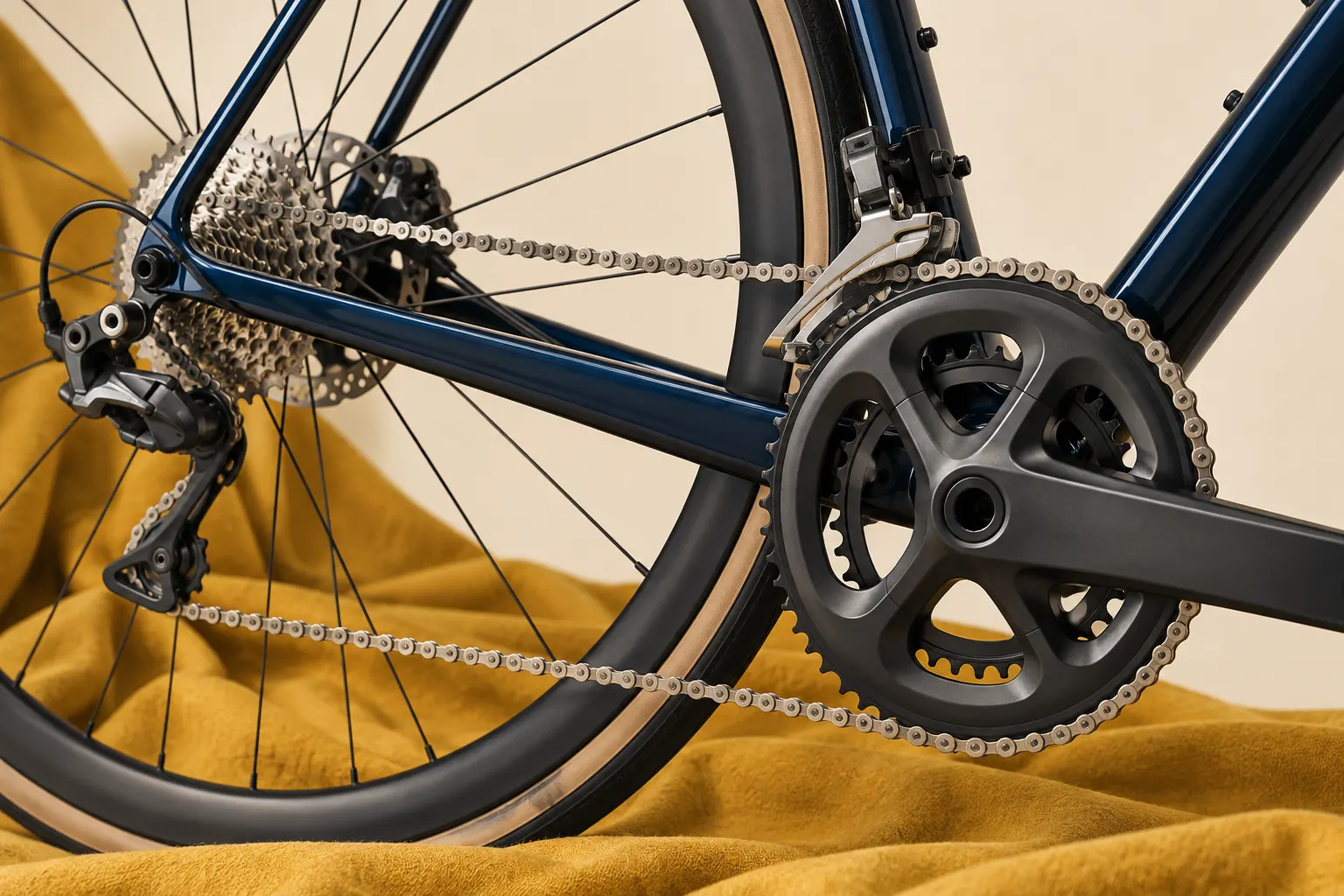
Define the comparison before entering numbers
Gear development describes a theoretical distance travelled for one complete crank turn. It can help organise a comparison between documented gear combinations, but it does not measure how hard a ride will feel. Start by recording the actual chainring and rear sprocket tooth counts and a wheel circumference appropriate to the setup. Do not infer the selected gear from a product family name or from a photograph where teeth cannot be reliably identified. Use the component documentation or qualified help where the combination is uncertain.
Schwalbe dimensions and wheel measurement ?
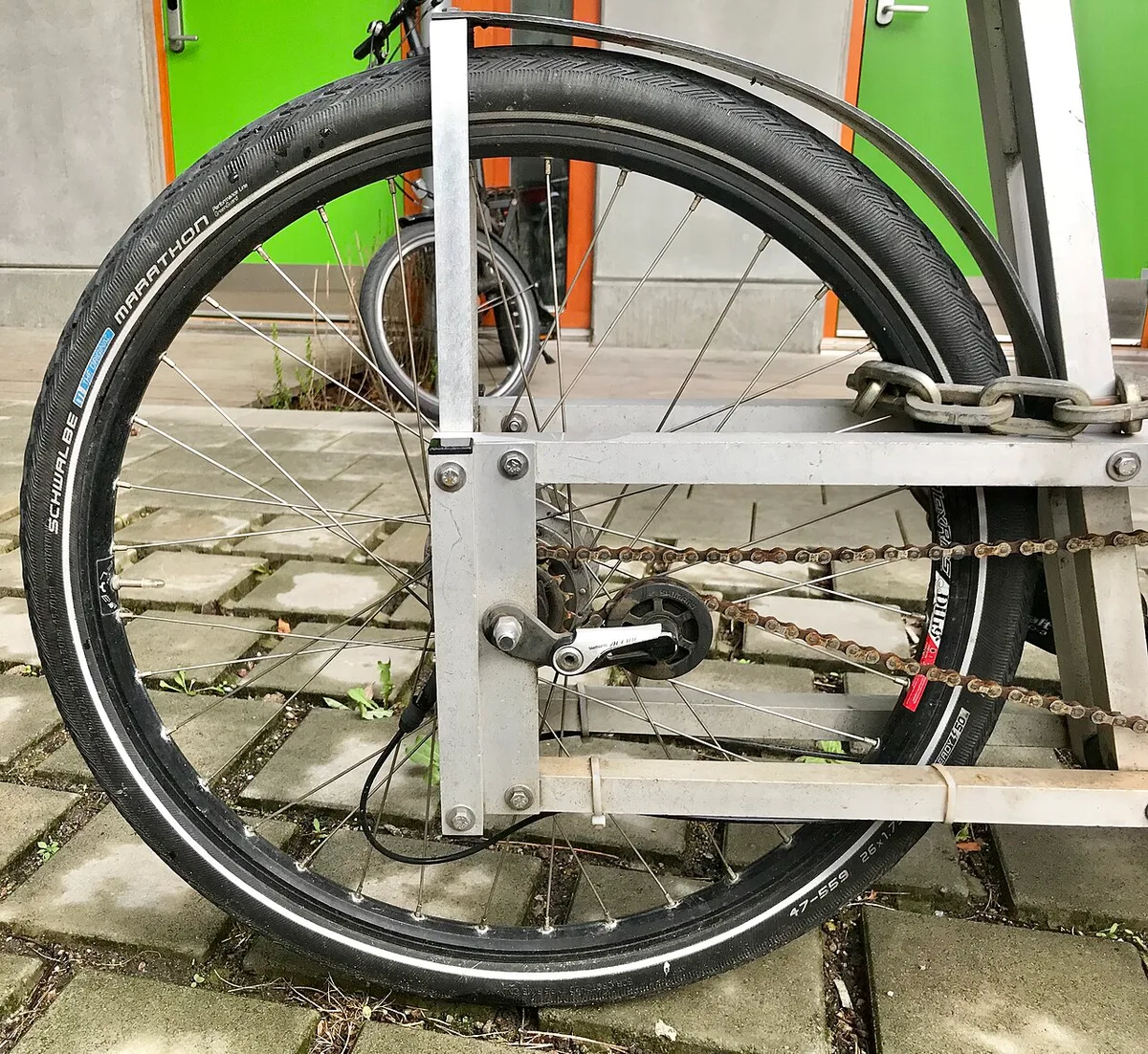
Keep circumference separate from the tyre name
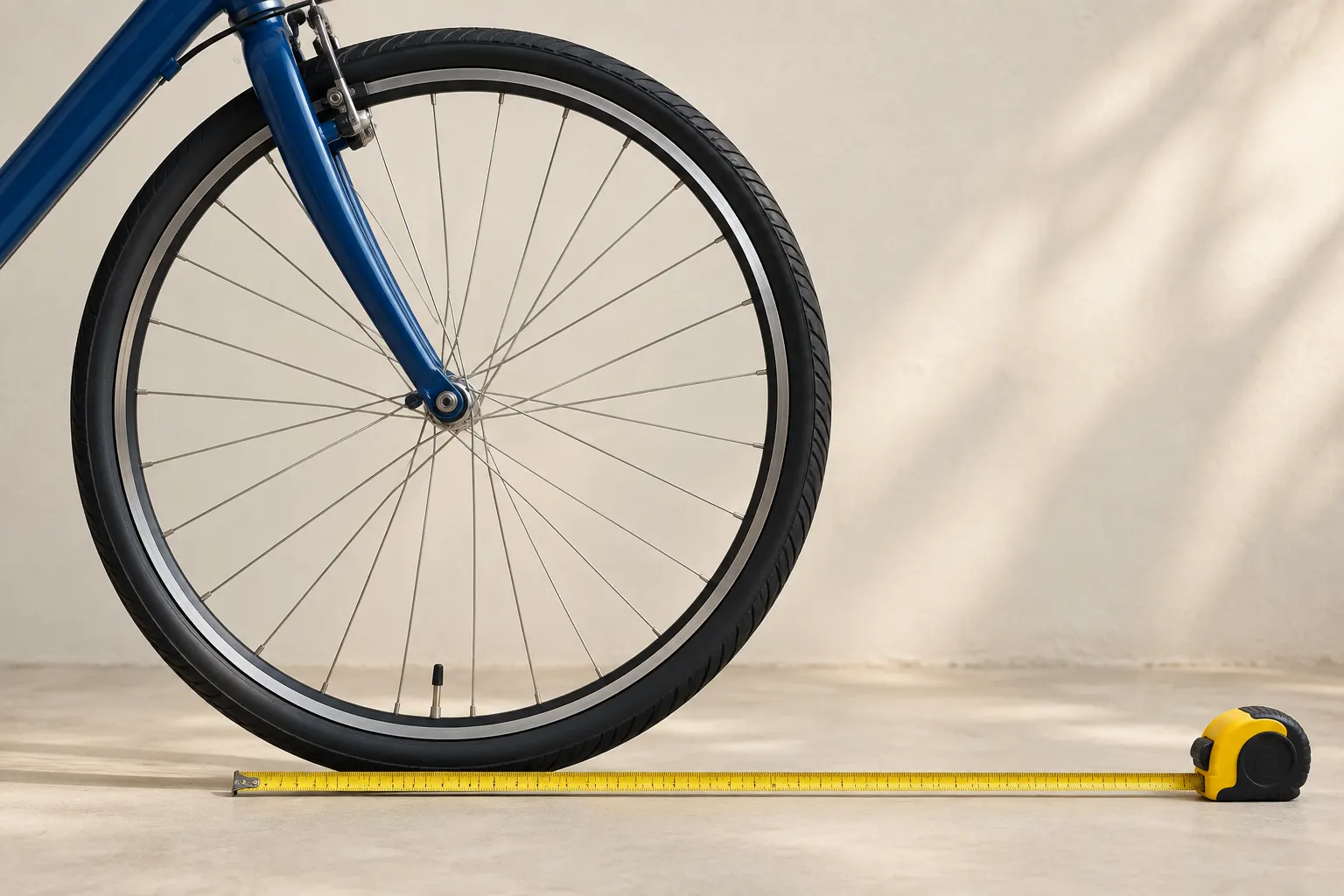
Schwalbe's wheel-dimension guidance explains why circumference depends on the actual assembly and conditions rather than only the nominal tyre label. If you use a measured rollout, keep the method, unit and setup record with it. The site's tool accepts millimetres and converts them to metres before applying the gear ratio. A copied value from another bicycle may make the arithmetic look tidy while describing a different setup. Preserve the source of the input, and label a hypothetical value clearly when the purpose is simply to understand the calculation.
Work through a clearly fictional example
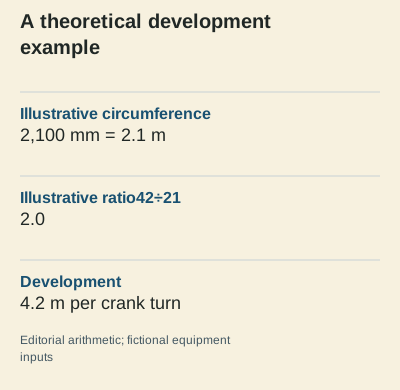
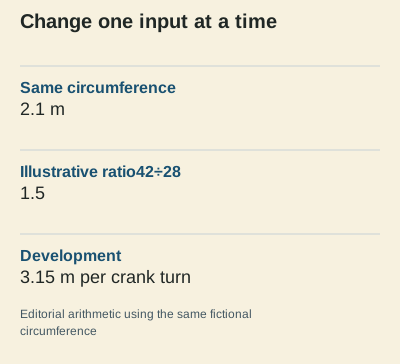
Suppose the circumference is 2,100 mm, the chainring has 42 teeth and the rear sprocket has 21 teeth. The ratio is 42 divided by 21, or 2. The theoretical development is 2.1 m multiplied by 2, giving 4.2 m per crank turn. A different hypothetical combination of 42 and 28 teeth gives a ratio of 1.5 and development of 3.15 m with the same circumference. These examples are arithmetic only. They do not recommend those components, establish compatibility or identify an appropriate gear for a particular person or route.
Do not turn the result into an effort promise
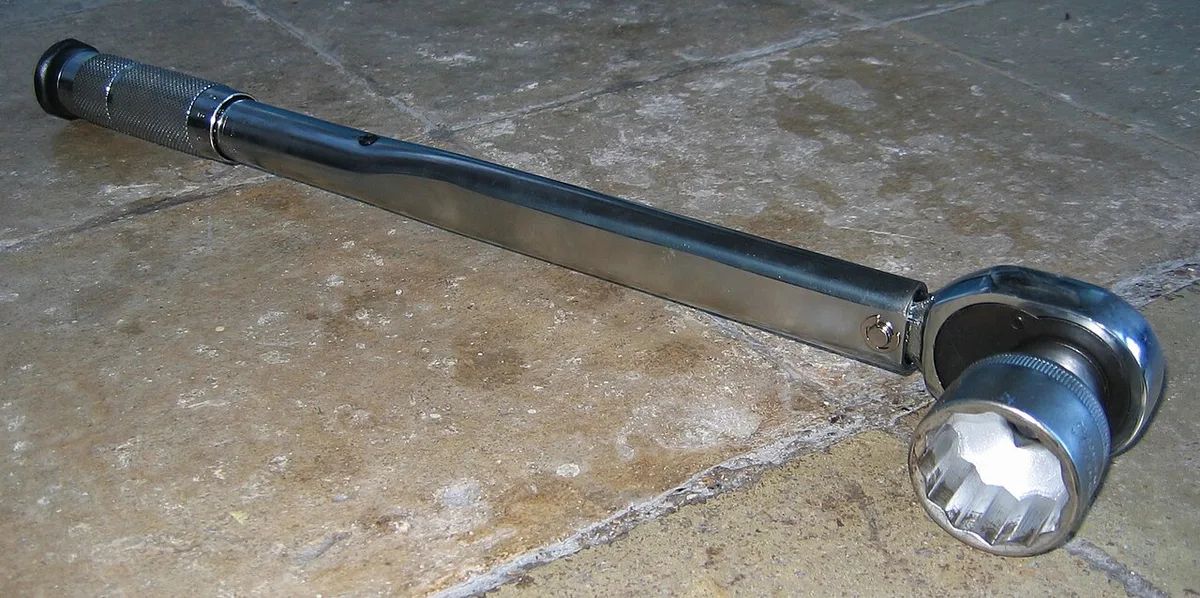
Development does not include rider capability, terrain, wind, surface conditions or the many other factors that affect a ride. A smaller or larger calculated number is not an automatic better choice. Keep any comparison focused on the defined quantity and avoid assigning a training target or guaranteed speed from it. The photographs here are documentary equipment context, not the hypothetical drivetrain used in the calculation. This publication has not tested the pictured components or assembled them into a compatible system. A numerical comparison cannot replace the relevant component instructions.
Save the inputs with the output
A useful gear note includes the bicycle and component identifiers, selected tooth counts, circumference value, its source and the calculated result. If you change the input, save a new row rather than leaving the old result beside a new component label. The calculator rejects blank, non-finite and out-of-range values, but a valid input format does not prove the input is true. Check the actual equipment and use qualified advice for component changes. This tool explains a mechanical relationship through arithmetic; it does not prescribe cadence, effort, equipment upgrades or a safe riding strategy. Save unrounded input values, then label the precision used for the displayed result.
Open official model documentation ?