Build a NSW night-riding equipment question list
Use NSW's official night-riding equipment requirements to frame questions without equating a lumen rating with legal visibility.
Updated:
Name the jurisdiction before using a checklist
This guide uses NSW's official bicycle-equipment information as a specific example. If you ride elsewhere, consult the relevant state or territory authority rather than assuming this page covers your location. Record the official source and date alongside the equipment you are considering. A retailer's statement that a light is bright does not identify which legal requirement it is intended to meet. Keep the actual light, mounting arrangement and operating mode in the question so that a general answer is not mistaken for evidence about a particular setup.
NSW bicycle equipment rules ? Knog Blinder900 current mode table ?
Read the complete NSW lighting requirement
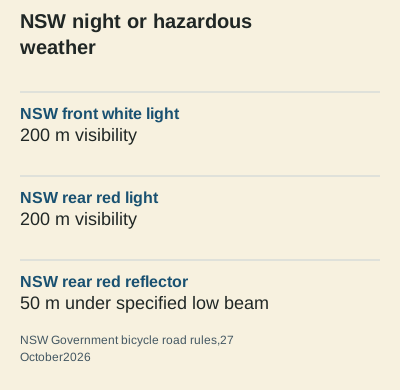
The NSW Government page says that riding at night or in hazardous weather requires a white front light visible for 200 metres, a red rear light visible for 200 metres, and a red rear reflector visible for at least 50 metres under another vehicle's low-beam headlights. The lights may be flashing or steady. These are visibility conditions, not lumen ratings measured by this publication. The reflector is a separate element in the stated requirement. Do not remove it from your equipment enquiry simply because a light is also being purchased.
Do not convert lumens into legal distance
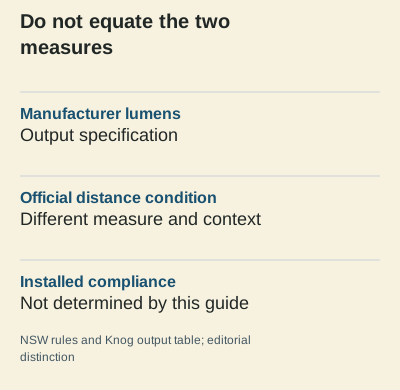
A manufacturer's output table cannot be turned directly into the official distance requirement. For example, Knog's Blinder900 table includes a 900 lumen high-steady claim, but that figure alone is not our evidence that any installed setup meets NSW's visibility conditions. We have not performed a road-visibility test. Ask the manufacturer or seller for relevant documentation tied to the exact product and mode, and use the official road authority information to identify the question. Avoid presenting an arithmetic conversion or a beam photograph as a compliance determination.
Check the other equipment separately
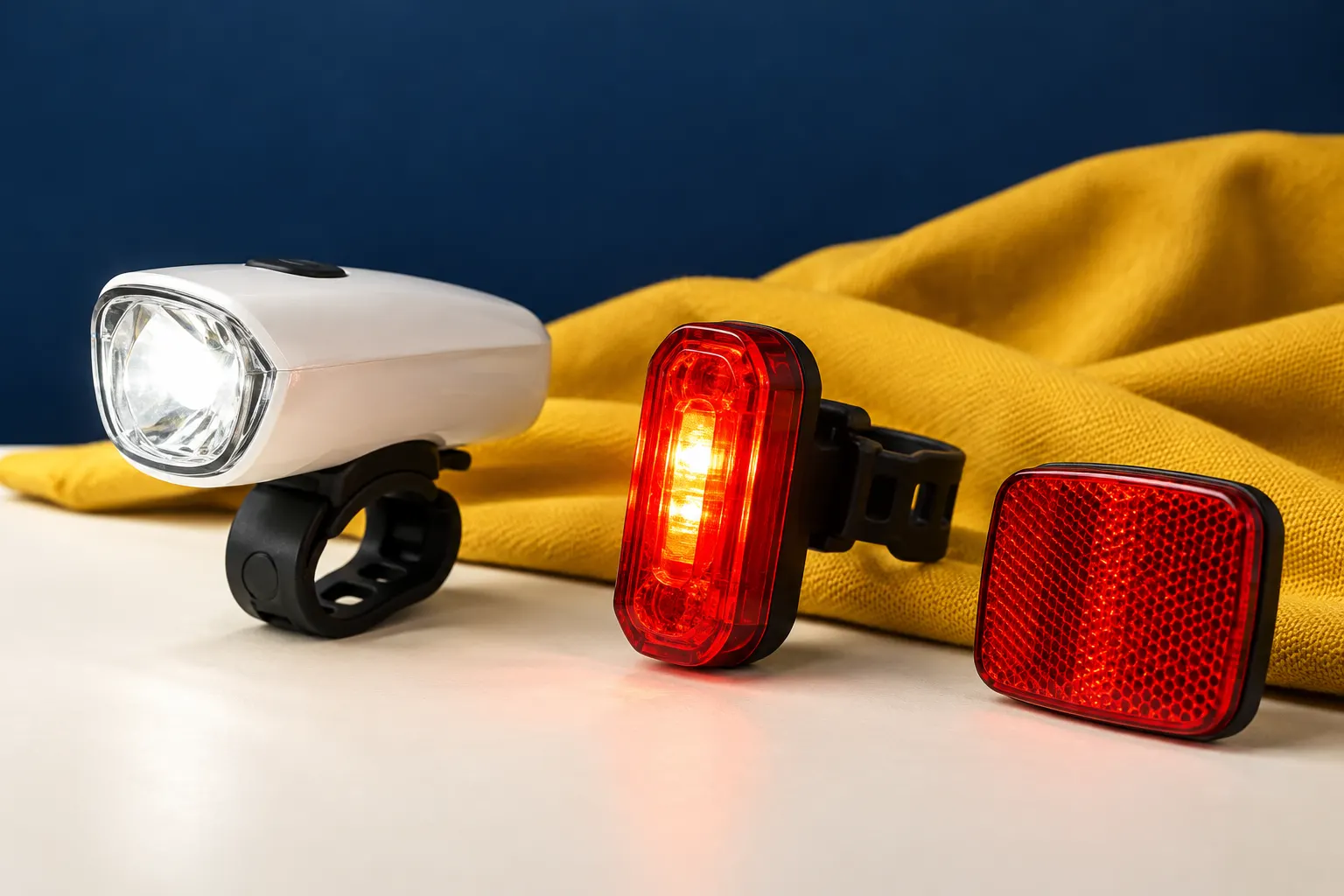
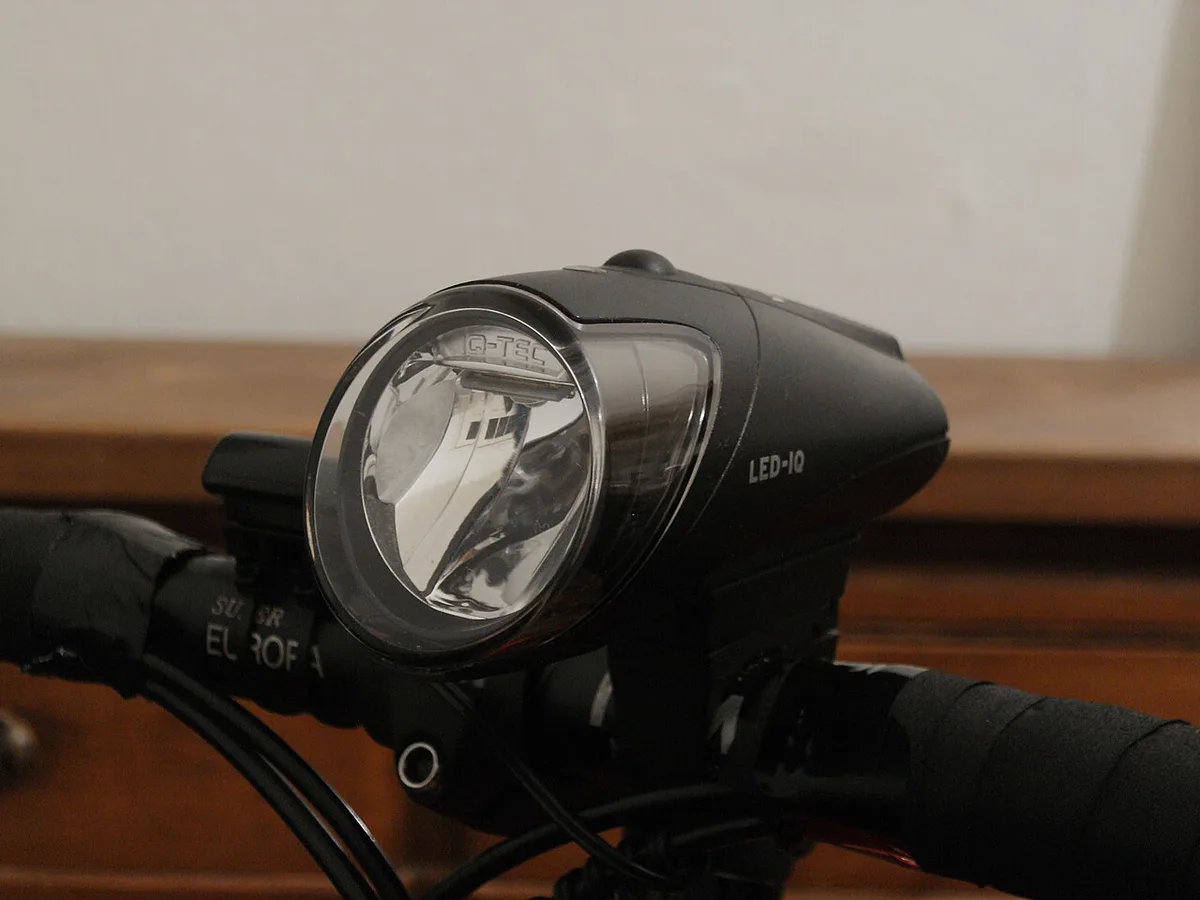
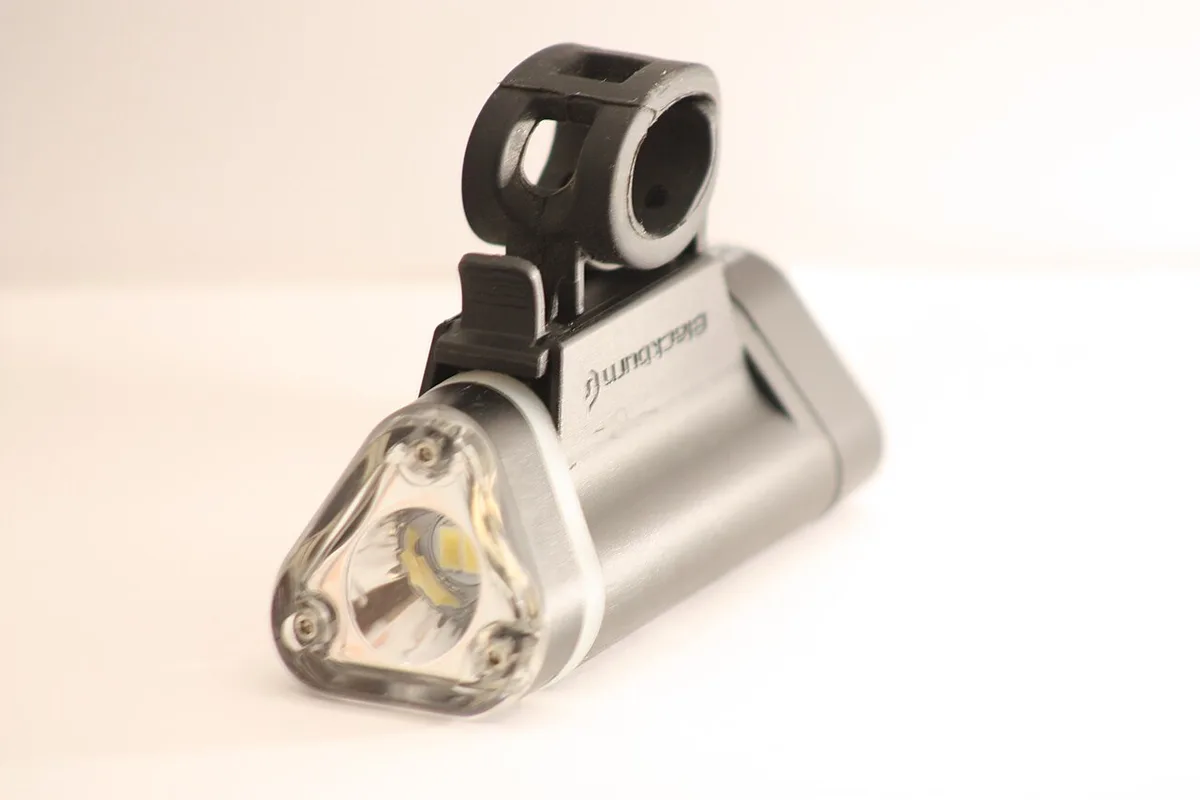
The same NSW page also refers to an effective brake and a functioning bell, horn or similar warning device. A light purchase does not resolve those requirements or establish that a bicycle is ready to ride. Use the complete official guidance and the equipment instructions, with qualified mechanical help where needed. The archive photographs alongside this article show different lights and brackets; they do not demonstrate a compliant NSW installation, the stated visibility distances or the Knog model used as an output example. Keep those limits clear when saving images to a purchase file.
Turn the rule into a precise enquiry
Prepare a short record identifying the jurisdiction, intended conditions, front light, rear light, reflector and any unresolved documentation questions. Ask for answers about the exact models and arrangement rather than a general reassurance about cycling accessories. Save the official link and check it again when the equipment or location changes. After purchase, follow the instructions and resolve uncertainties before relying on the equipment. This guide organises the buying questions; it does not give an individual legal ruling, certify roadworthiness or promise that meeting a listed requirement eliminates the risks of riding in poor visibility.
Open official model documentation ? Open official model documentation ?