A printed tyre width is not a frame-clearance measurement
Build a useful clearance question from actual tyre, rim and bicycle details rather than a nominal width alone.
Updated:
Keep the printed width in its proper role
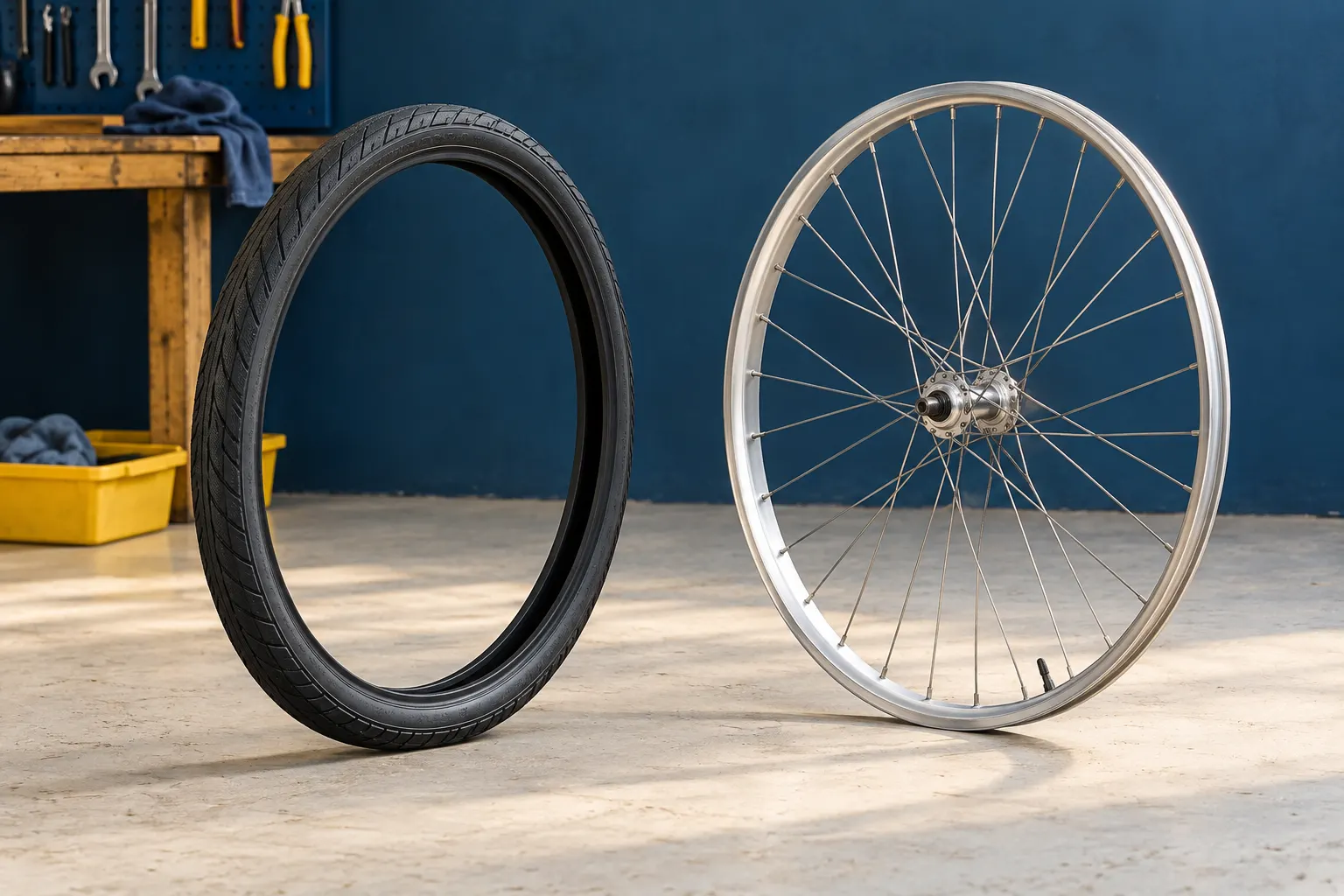
The width printed on a tyre is a useful identifier, but it is not a measurement of the space left inside your bicycle. Start a replacement enquiry by recording the exact tyre, rim, frame and any mudguards. Include the current combination and the proposed change. This gives the bicycle manufacturer or mechanic something concrete to assess. A statement such as wider tyres fit this kind of bike leaves too much unspecified, especially when a model name covers several years, frame sizes or wheel configurations.
Schwalbe dimensions and wheel measurement ?
Measure the assembly you are comparing
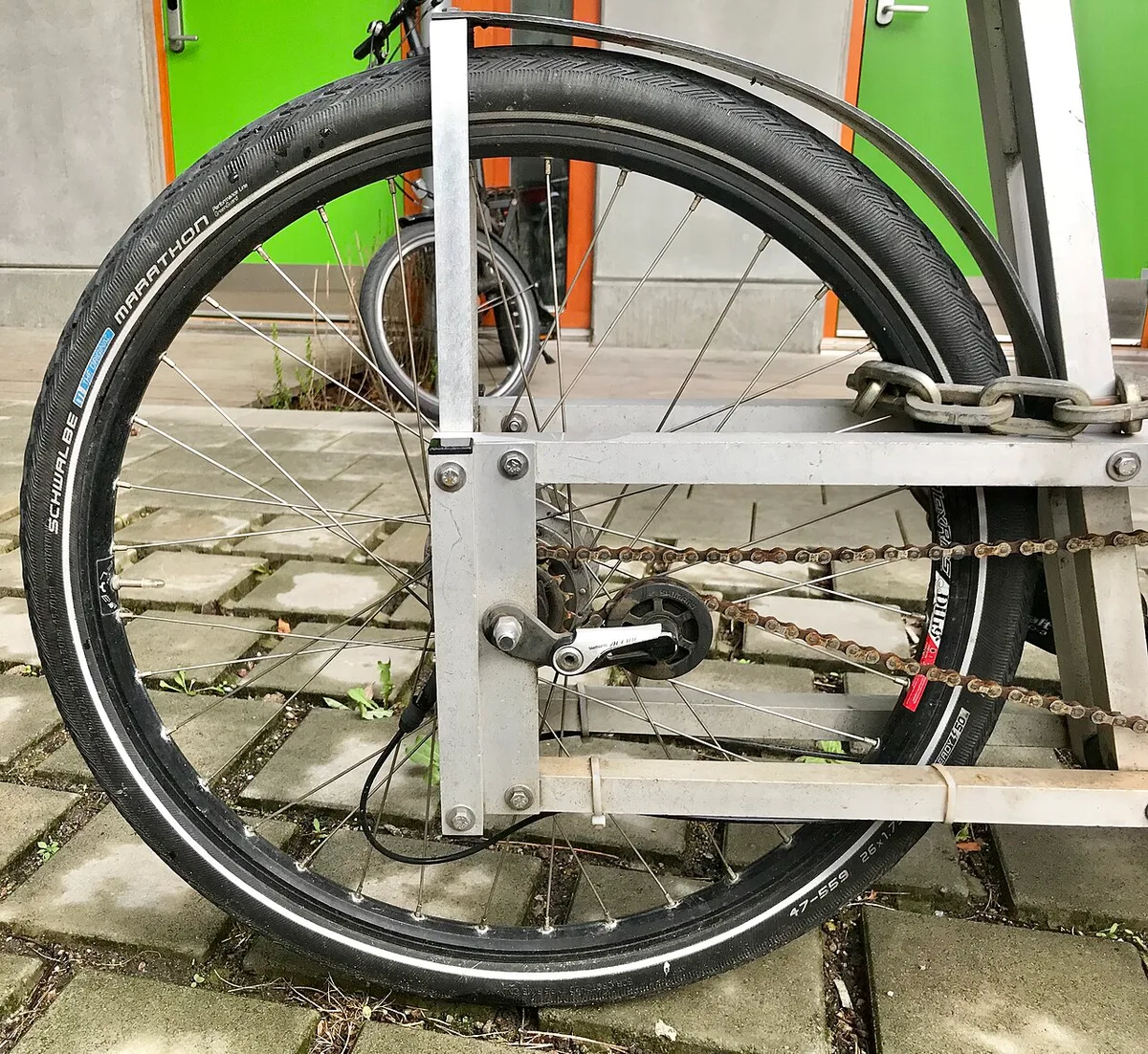
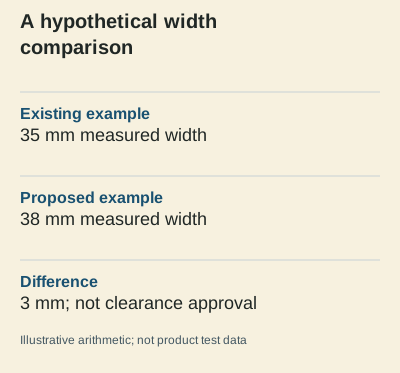
Schwalbe explains that rim width, inflation and the tyre itself affect the mounted result. Its dimensions guidance also notes that a newly fitted tyre can expand by 1–2 mm over time. That observation is not a spare-clearance allowance. It is a reason to keep measured dimensions and the measurement conditions together. For a fictional comparison record, an existing tyre might be measured at 35 mm while the proposed mounted example measures 38 mm. The 3 mm difference describes those examples only; it does not establish whether either assembly meets a particular bicycle requirement.
Ask about the narrowest relevant location
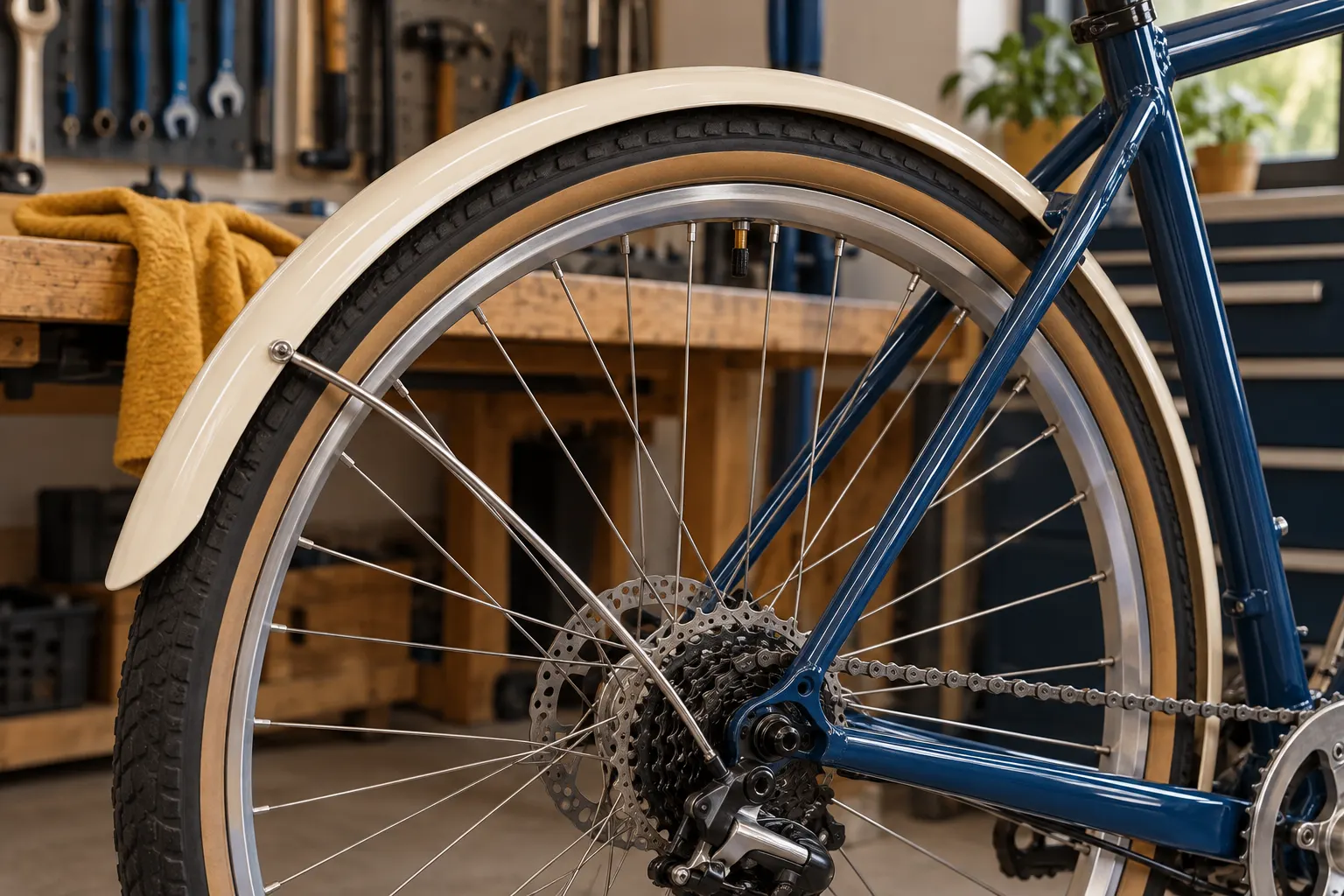
Prepare photographs that show the whole wheel installation and the areas the manufacturer asks you to check. A single overhead image may hide the part that governs the decision. Note whether mudguards or other accessories are fitted, and whether the wheel and tyre are the exact intended versions. Avoid extracting a gap from a photograph taken at an angle. A ruler in a picture can help a specialist understand your question, but it is not a substitute for the measurement method or minimum clearance specified for the actual bicycle.
Keep condition separate from dimensions
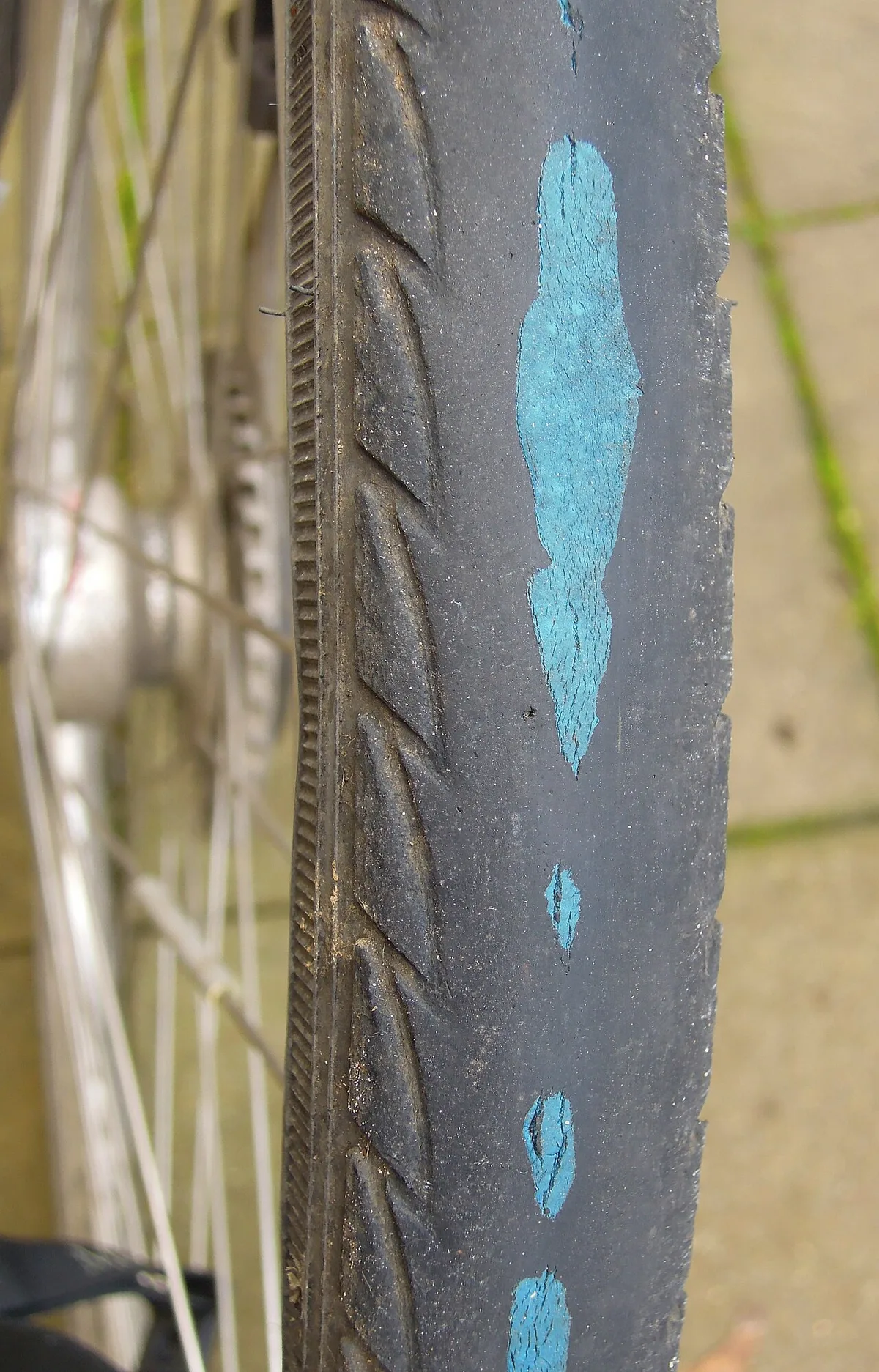
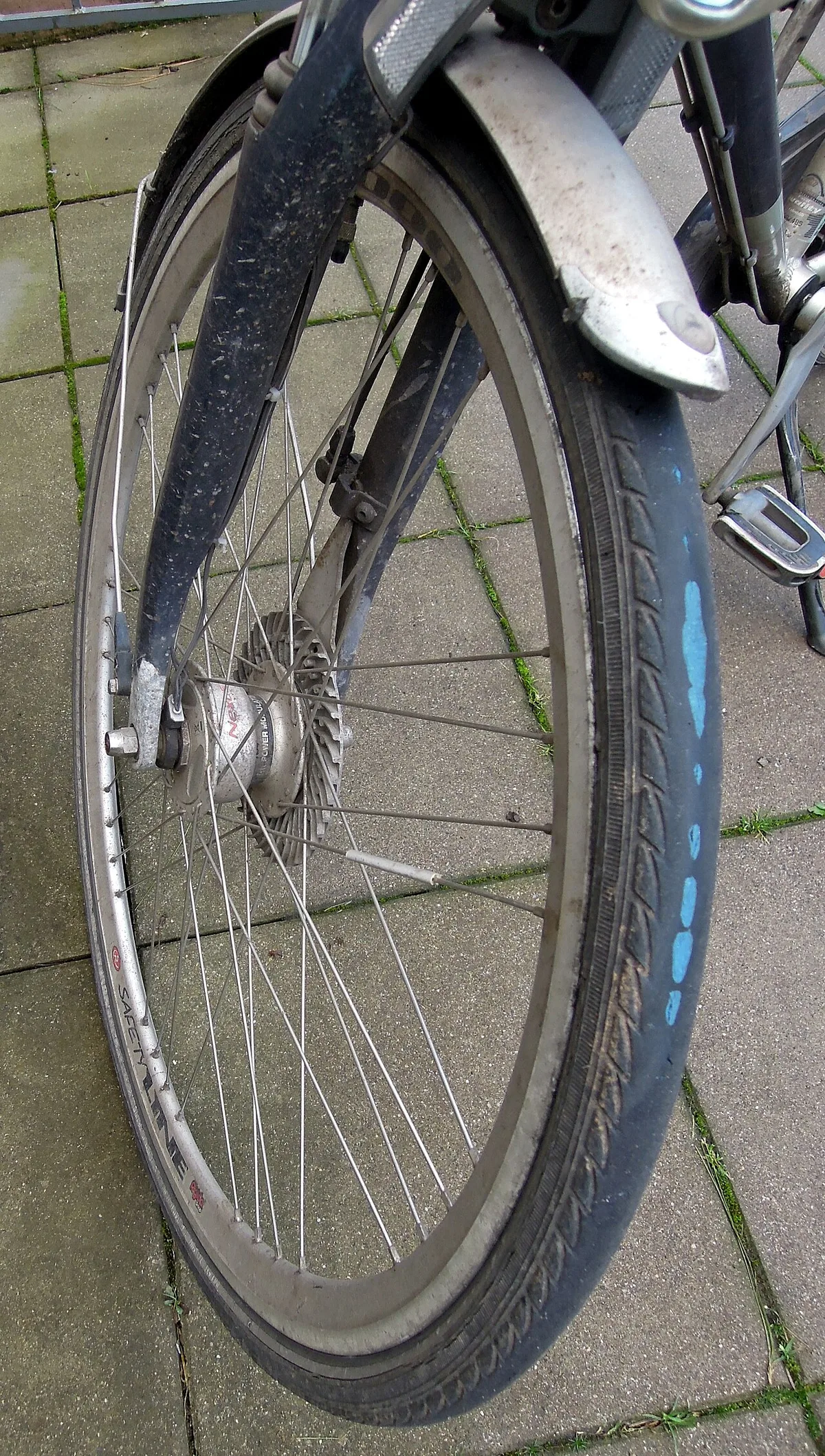
The archive photographs alongside this guide show used tyres with visible wear. They illustrate equipment identification and surrounding parts, not an acceptable condition or a tested clearance. A tyre can have a clearly readable size while presenting another issue that needs attention. Do not let a successful size comparison answer a separate condition question. If a part is damaged, the markings are unreadable or you are unsure how to inspect the assembly, pause the purchase decision and obtain qualified advice with the bicycle available for inspection.
Finish with a documented question
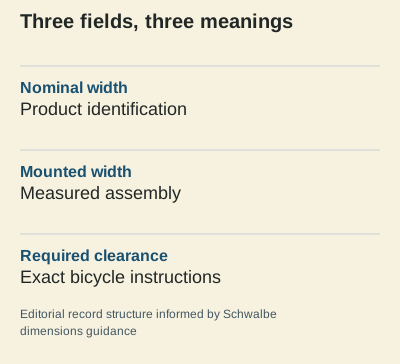
Send the proposed tyre designation and exact rim details together with the bicycle model and relevant photographs. Ask which manufacturer instructions govern the combination and what needs checking after installation. Save the response with its date, then confirm that the seller is quoting the same variant. Your final note should distinguish a nominal width, an observed mounted width and the required clearance; those are three different fields. Leaving one unresolved is more useful than replacing it with a general online rule. This guide supplies a record structure, not a universal tyre-width limit or an installation approval. Include the date and model year in the saved answer so a later specification change is easier to spot.
Open official model documentation ?